Basic
₹6,690 starting
- Requirement review
- Single-route setup
- Standard delivery reporting
A useful business benefit, confirmed by our sales team after you share your requirements.
By submitting, you agree to receive promotional communication from RP Infotech.
Need help? Call Sales: +91 93190 44022
Your code is ready. Our Sales Manager will confirm the next step.
Your Coupon Code
Click to copy
📧 We've also sent this code to your email.
Show this code when you call us to confirm your selected offer.
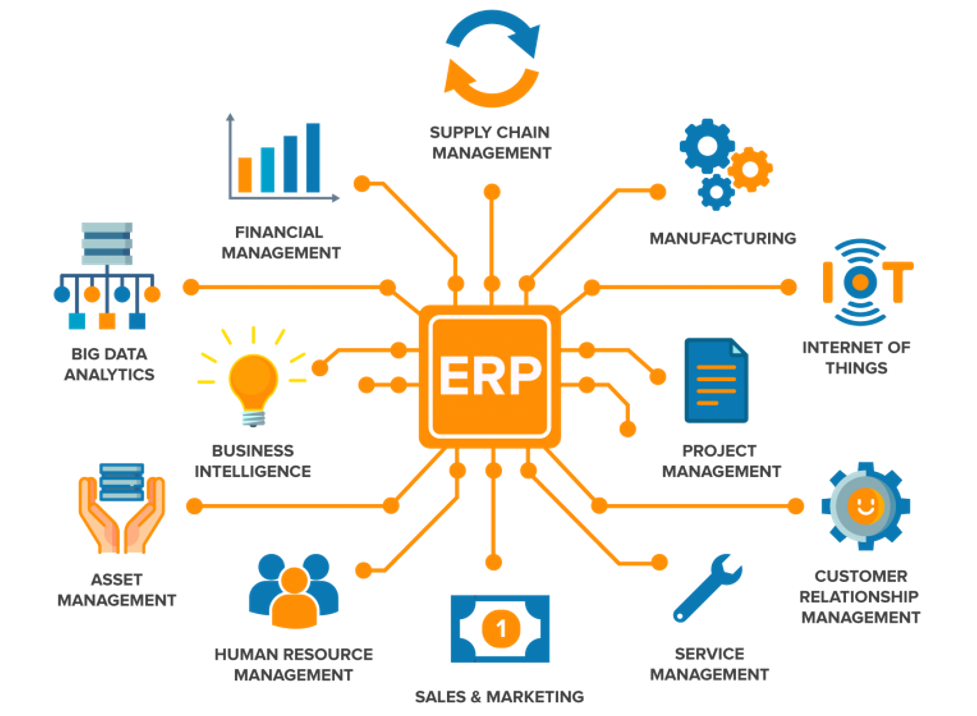
A ERP Software Service decision should begin with the work that needs to improve, not with a copied feature list. For an organisation in Dhing, that means identifying who uses the service, what information they need and which result must be dependable. RP Infotech approaches the brief by connecting the proposed capability to realistic general business scenarios and to the customer's own operating rules.
For general business users, useful scenarios can include a new request, missing information, reassignment, cancellation or correction, and management review. The exact set must come from the customer; examples guide discovery but should not be presented as universal rules.
The service should be understood through its operating purpose: to turn a repeatable operational process into controlled records, roles, approvals and reports that users can follow. A useful scope names the responsible user, the source of each important field and the event that completes a task. That makes demonstrations and quotations easier to compare on substance.
For a Dhing buyer, local usefulness comes from applying the service to actual users and constraints. A retailer, clinic, institute or professional firm should only be used as an example when its workflow genuinely matches ERP Software Service; unrelated industries should not be added for keyword coverage.
The customer should confirm what a successful result looks like and what evidence remains after an exception. This gives ERP Software Service a reviewable purpose rather than treating completion as the presence of a screen or feature.
Useful discovery evidence includes master data, user roles, field definitions, workflow states, approval rules, calculations, reports and migration samples. RP Infotech can use it to separate essential launch requirements from optional improvements and external dependencies. That separation keeps estimates and acceptance discussions understandable.
Implementation works best in short review cycles. RP Infotech can demonstrate a defined journey, collect consolidated feedback and close critical findings before the next dependent area is introduced. This gives users a clearer view of progress than a single late-stage reveal.
Different roles should complete a normal transaction, incomplete input, authorised correction, approval exception, report check and role-based access test themselves. An administrator demonstrating every step cannot reveal whether labels, permissions and hand-offs make sense to day-to-day users. Training notes should be updated from questions raised during this review.
Use an anonymised example and follow it from initial input to final decision. If an authorised user cannot explain the status and next action, the Dhing workflow needs clarification before approval.
Controls are most useful when tied to a real failure mode. Consider poor source data, excessive permissions, undefined corrections, parallel spreadsheets, untested calculations and unclear support ownership; for each one, record prevention, detection and recovery responsibility. Generic claims such as 'fully secure' should be avoided because security also depends on hosting, credentials and operational practice.
Better visibility is valuable when it leads to a responsible action. A defined queue, status or report can help users prioritise and follow up, but only if definitions are shared and records are maintained. This is why process governance belongs in the service discussion.
The value of working with RP Infotech lies in a structured route from requirement to review. The team asks how information is created, checked and used, then connects the answer to an achievable scope. External approvals and customer-controlled dependencies remain visible.
Depending on the agreed workflow, the customer may also compare the connected role of SMPP Connectivity Service, read the planning overview for Job Portal Development or consider Web Development Service. These links point to verified active RP Infotech service pages; they are planning references, not a recommendation to add unrelated scope.
Separate essential end-to-end cases from optional automation, reports and integrations. Validate the smallest complete workflow, including access and correction controls, before adding dependent capabilities. Link it to a ERP Software Service acceptance case.
Use representative roles and test a normal transaction, incomplete input, authorised correction, approval exception, report check and role-based access test. Review the final output and recorded history, not only whether the first screen accepts data. Confirm it during the ERP Software Service review.
No responsible service provider can guarantee revenue, rankings, delivery by third parties or user adoption. RP Infotech can agree scope and acceptance evidence; the customer remains responsible for its data, decisions and day-to-day operations. Test it with the Dhing team.
Common dependencies include incomplete decisions, unreliable source information and poor source data, excessive permissions, undefined corrections, parallel spreadsheets, untested calculations and unclear support ownership. Identifying an owner and test method for each dependency reduces avoidable uncertainty. Record this in the Dhing brief.
Prepare one normal case, one difficult case and the users involved. RP Infotech can review that evidence and discuss a clear, service-specific brief for Dhing without relying on unsupported promises.
These are indicative starting prices for Dhing, Assam, India. Final scope depends on throughput, routes, integrations, support hours and third-party charges. Request a written quotation before purchase.
₹6,690 starting
₹12,690 starting
₹21,690 starting
₹34,690 starting
Next step: share your expected volume, sender or route requirement, integration needs and launch date. RP Infotech will confirm availability and send a scope-based quotation for Dhing.
The exact scope is confirmed for the customer’s Dhing, Assam, India requirement. It can include setup, configuration, testing and support for the selected ERP Software Service plan.
RP Infotech first confirms the business requirement, expected volume, integrations and support contact. The implementation timeline is then shared before work begins.
Share the use case, expected traffic or users, required integrations, preferred launch date and support expectations. This lets the team prepare a scope-based quotation for Dhing.
Support options depend on the selected plan and service scope. The quotation will clearly state response channels, maintenance coverage and any third-party charges.
 Get in Touch
Sending your message…